

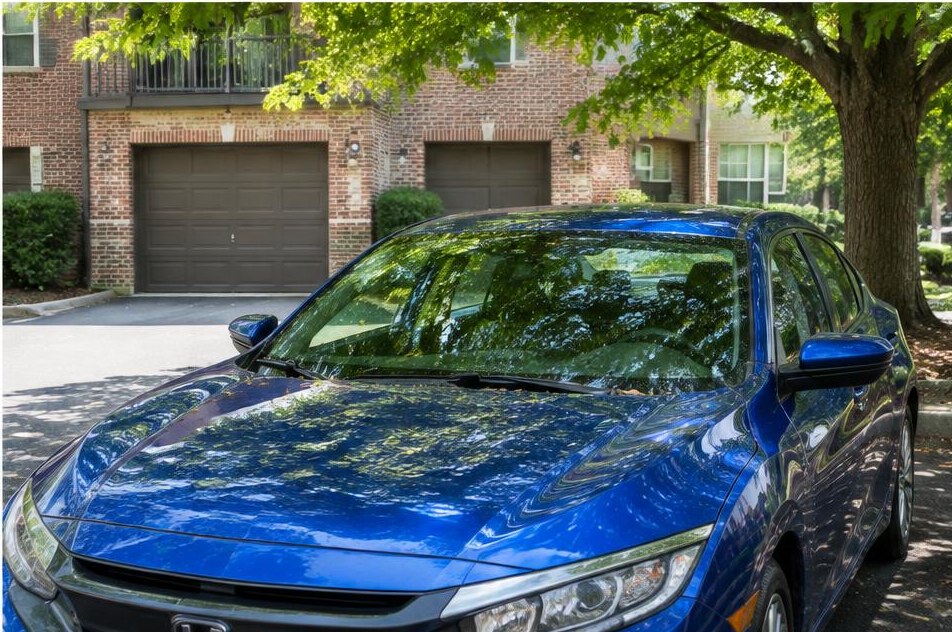
A car can develop problems while sitting still. The battery loses charge, tire pressure can drop, and the next start can reveal trouble that wasn’t obvious when you parked. Before taking a car from a Greenbelt driveway onto the Beltway, give it a careful look in a safe place. Check the manual and plan a short, sensible first trip. Arrival handles roadside jump starts, car lockouts, changes onto your usable spare, and gas delivery when one of those problems keeps you parked.
Walk around before you start the engine
Begin with the space around the car. Look for obstacles, debris, visible leaks, and anything resting against a tire or exhaust outlet. Check underneath from a safe standing position without crawling under the vehicle. If you see a puddle you can’t identify, a strong fuel smell, or damaged components, get appropriate professional advice before starting. Don’t assume every mark on the pavement came from your car, but don’t ignore a fresh sign either. Note what you see so you can describe it clearly rather than trying to diagnose it from a distance.
Check that windows, mirrors, lights, and the windshield are clear enough for safe travel. Remove loose items that could obstruct pedals or roll around the cabin. Look for signs of animal activity if the car has been parked for an extended period, especially around visible wiring or underhood areas you can inspect safely. Don’t reach blindly into spaces or disturb hot or moving parts. Follow the manual for fluid checks and other preparation. A walkaround isn’t a full mechanical inspection, but it can reveal a reason to pause before leaving home.
Give the tires a proper check
Look at every road tire and use a suitable gauge to check pressure against the vehicle’s specified guidance. Appearance alone won’t tell you the correct pressure. A visibly flat tire needs attention before driving; don’t take it down US-1 to see if it improves. Look for cracking, bulges, embedded objects, and other visible damage without pulling anything out. A tire professional should handle questions about damage, age, or deterioration. A parked car can lose pressure without covering a mile, and topping up air doesn’t resolve the cause of ongoing loss.
Include the spare in your preparation. Locate it, check its condition and specified pressure, and find the wheel-lock key if the car uses locking hardware. Some vehicles don’t carry a spare, so confirm your equipment before you need a roadside change. Arrival installs the customer’s usable spare; the replacement needs to be present and suitable for the car. If you find a flat in a College Park driveway, share the spare details when you call. Don’t wait until belongings are spread beside the car to discover the replacement is unusable too.
Treat the first start as useful information
A battery can lose charge while parked because vehicle systems continue using some power, and condition affects how well it tolerates sitting. When you try to start, notice whether the engine turns normally, turns slowly, or doesn’t turn at all. Switch off unnecessary accessories and follow the starting procedure in the manual. Repeated attempts aren’t a battery maintenance plan. If you see battery damage, leakage, swelling, or smoke, stop and report it before anyone attaches equipment. Use the vehicle’s approved jump points and procedure rather than improvising cable connections.
If Arrival provides a jump and the engine starts, arrange an appropriate battery and charging-system check. A successful start doesn’t repair an underlying problem. Don’t rely on a brief idle in the driveway as a complete storage strategy. Never run an engine in an enclosed garage, and keep people away from exhaust. If the car will sit again, follow manufacturer guidance for storage and compatible battery maintenance equipment. Different vehicles have different requirements, particularly hybrids and electric vehicles, so use the instructions for your exact model rather than advice meant for another car.
Plan access, fuel, and the first trip
Make sure you have the correct key before closing doors or loading the car. A lockout can happen during a rushed return to driving when keys and a phone are left on a seat. Keep them with you while checking the vehicle. If the keys are locked inside, leave improvised entry tools alone and call for car-lockout assistance. Have identification and authorization information ready. If keys are missing entirely, explain that clearly; retrieving keys from inside the vehicle is a different task from obtaining a replacement through an automotive key specialist.
Check the fuel level and consider how long the vehicle has been stored. If you suspect contaminated or unsuitable fuel, get a repair professional’s guidance rather than assuming fresh gas solves everything. For an empty tank, Arrival delivers enough gas to reach a station; diesel drivers should call first. Once the car is ready, choose a practical first route near Riverdale, Hyattsville, or your starting neighborhood instead of immediately committing to a long DC or I-495 trip. Stop safely if steering, braking, vibration, warning lights, or engine behavior indicates a problem that needs attention.
Before parking again, make a short checklist based on what you found: tire pressure, spare access, key location, and the manufacturer’s storage guidance. Keep that list with the vehicle information so the next return to driving starts with clear steps rather than another rushed departure.
When to call Arrival
Call Arrival when a parked car needs a jump start, car-lockout assistance, a change onto your usable spare, or gas to reach a station. Give us the location, vehicle model, symptoms, and access instructions. For diesel, call first. We’ll come to you for roadside help. A mechanical fault or damaged component needs an appropriate repair professional rather than repeated starting attempts.
Learn about our jump starts service. Find local help in Riverdale and Washington, DC.
CALL (833) 946-9308