
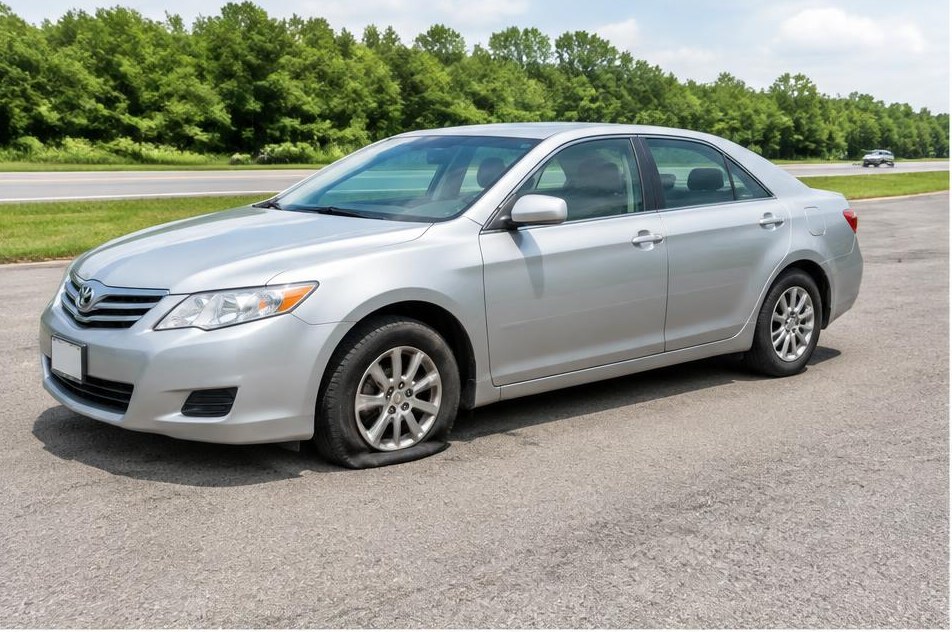
A flat tire on the Beltway is a safety problem before it’s a wheel problem. Keep your attention on controlling the vehicle and reaching a safe stopping place. Once stopped, turn on your hazards and look at your surroundings before opening a door. Arrival changes a flat onto the customer’s usable spare at a safely accessible location. Call us with your position, vehicle details, and spare information. You don’t need to stand beside the damaged tire to make that call.
Control the stop before checking the damage
If the tire fails while you’re moving, hold the steering wheel steadily, ease off the accelerator, and avoid abrupt steering or braking. Follow your vehicle’s emergency guidance. Work toward a safe stopping area as traffic and control allow. Don’t make a sudden move across lanes to reach a particular exit. Once you’re stopped, set the parking brake and activate hazard lights. If the vehicle is stranded in a live lane or the situation presents immediate danger, contact emergency services first. An ordinary roadside visit doesn’t provide emergency traffic protection.
Where you stop affects what work can be done safely. A firm, level parking area provides a different setting from a narrow, sloping shoulder beside I-495. Don’t drive on a visibly flat tire simply to reach your preferred shop or a familiar gas station. Tire damage can affect control and damage the wheel. Explain the current position when you call, including whether the car is fully clear of traffic. Avoid getting out just to measure shoulder width. Describe only what you can establish safely from where you are.
Choose a safe waiting position
Before opening any door, look for passing vehicles, barriers, uneven ground, and other hazards. There’s no universal rule that puts every driver in the same waiting spot. A wide parking lot in Greenbelt and a tight Beltway shoulder demand different decisions. Follow emergency responders’ instructions when they’re involved. Never stand in a travel lane, between vehicles, or beside the wheel facing moving traffic. Keep passengers together in the safest available place and tell the person helping where you are waiting. Don’t send someone across the roadway to watch for assistance.
Stay visible without placing equipment in traffic. Use the vehicle’s hazards and follow the instructions for any warning equipment you already carry, only when it’s safe to deploy. Don’t walk back along a dangerous shoulder for the sake of setting something down. Rain, darkness, bends, and large vehicles can make a stopped car difficult to see. Tell Arrival about those conditions. For passing drivers, check current Maryland guidance on Move Over. At your own stop, concentrate on staying clear and sharing accurate information rather than directing traffic around the car.
Confirm the spare and the wheel hardware
Arrival installs the usable spare you already have. Some vehicles carry a compact temporary spare, some have a full-size spare, and others have no spare at all. Check your vehicle information before assuming there’s one under the cargo floor. If reaching it means unloading belongings beside fast traffic, leave them alone and describe the storage location on the call. Tell us if the spare is missing, flat, visibly damaged, or inaccessible. A wheel change needs a suitable replacement wheel and tire, not just a jack in the trunk.
A locking wheel nut needs its matching key. That key is often stored with the vehicle tools, but check your own car rather than relying on a usual location. Mention missing hardware, damaged nuts, unusual wheels, or previous trouble removing a wheel. Don’t try forceful roadside experiments while you wait. Keep the spare area accessible when it’s safe to do so, and secure loose cargo so nothing falls into the working space. Useful information at the start helps identify what the roadside job actually requires before equipment is positioned.
Share the route details that locate you
On the Beltway, give your direction of travel, nearby exit or marker, and whether you’re on the main roadway or a ramp. Opposite directions can look close on a map while requiring a very different approach. On US-1 or MD-210, share the nearest intersection and which side of the road you’re on. A location pin helps, but pair it with a description. Never cross lanes to read a sign. Stay reachable by phone and correct any unclear directions before someone approaches the wrong carriageway or entrance.
After the spare is fitted, read its restrictions and follow the vehicle manual. A compact spare changes the plan for your trip; it isn’t a substitute for normal tires indefinitely. Arrange a tire professional’s inspection of the damaged tire and wheel. Arrival’s roadside work is the change onto your spare, not puncture work or selling a replacement tire. If handling, vibration, or braking feels wrong afterward, stop safely and seek guidance. Keep passengers away from equipment during the change and wait until the technician tells you the working area is clear before approaching.
Afterward, restock the items you used and return the wheel-lock key to its usual place. Have the spare checked again once the normal wheel is back on the car. A roadside change uses your backup, so restoring that backup belongs on the same follow-up list as getting the damaged tire inspected by a professional.
When to call Arrival
Call Arrival for a roadside tire change when you have a usable spare. Share your exact location, direction of travel, vehicle model, and wheel-lock key details. Tell us about shoulder conditions without stepping into traffic to inspect them. We’ll come to your location for the change. If you’re in a live lane or immediate danger, contact emergency services first.
Learn about our tire changes service. Find local help in Riverdale and Washington, DC.
CALL (833) 946-9308