
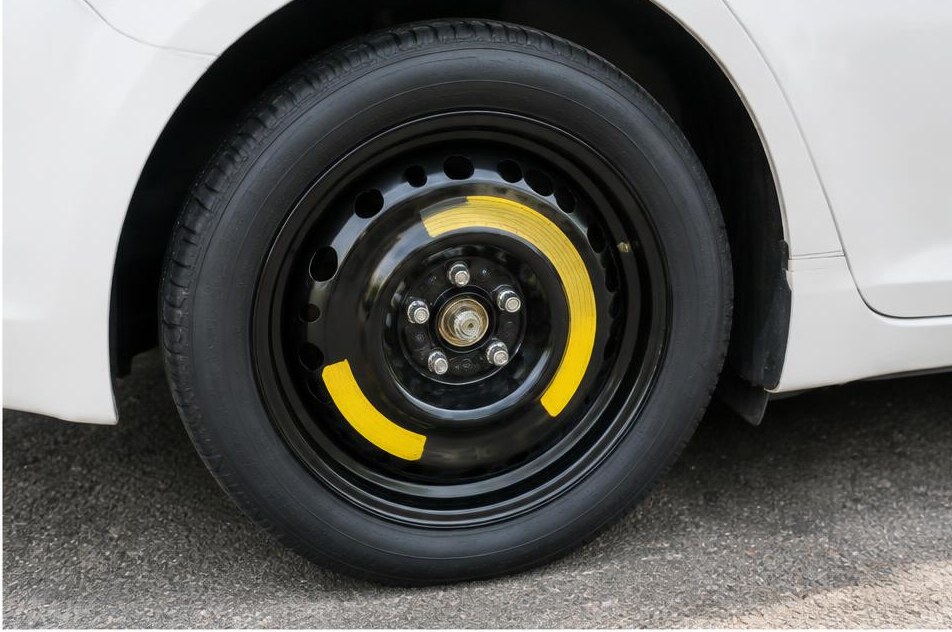
A donut spare helps you make a limited trip after a flat; it doesn’t put your normal driving routine back on track. The right speed, distance, pressure, and fit come from the spare’s markings and your vehicle manual. Don’t use a number remembered from a different car. Before leaving a Riverdale parking lot or returning to US-1, read the instructions that apply to your actual spare. Plan the next journey around getting appropriate tire attention, not finishing every errand on your list.
Start with the spare you actually have
The word spare covers different equipment. A compact temporary wheel is different from a matching full-size replacement, and your vehicle can have specific rules for either one. Read the sidewall markings and the owner’s manual together. If the instructions are unclear or conflict with your assumptions, get vehicle-specific guidance before driving. Don’t borrow a neighbor’s spare just because the wheel looks similar. Fit depends on more than appearance. The correct wheel, tire size, hardware, clearance, and manufacturer requirements all matter when putting a replacement on the vehicle.
Temporary spare restrictions apply on city streets too. A trip across Hyattsville still includes braking, corners, potholes, and traffic. Avoid treating the speed marking as a target or the distance limit as an allowance to use up. Conditions can demand slower travel and a shorter route. Follow any instructions about loads and wheel position in your manual. Some vehicles need particular arrangements that aren’t obvious from looking at the flat. Share the exact model when asking for assistance so the plan starts with your car rather than a generic rule.
Pick a destination before you pull away
Choose a practical place for a tire professional to inspect the damaged tire and wheel. Confirm that the destination can handle your needs before driving there. A route from College Park toward Greenbelt can look short while involving a busy interchange or an unnecessary highway stretch. Compare safe, suitable options within the spare’s restrictions rather than automatically following the fastest route in your navigation app. Keep the drive focused. School pickups, shopping, and a cross-DC detour can wait while the car is running on equipment intended for limited use.
Check the weather, road surface, and load before setting out. A temporary spare can affect handling, so give yourself space, avoid abrupt maneuvers, and follow the vehicle instructions. Don’t overload the car because the wheel change is finished. If your planned route requires conditions outside the spare’s limits, change the travel plan instead of stretching the instructions. Ask a tire professional for guidance when you’re uncertain. Getting mobile is only one step; reaching appropriate tire care safely is the reason for using the spare in the first place.
Check condition and pressure before an emergency
A spare that sits under the trunk floor still needs attention. Check its pressure with a suitable gauge using the spare-specific specification, not an assumption based on the normal road tires. Look for visible damage, cracking, and other changes while the car is parked safely at home. A tire can deteriorate without being driven. Ask a tire professional about its age and condition, especially if you don’t know its history. Storage out of sight doesn’t keep air from escaping or make rubber last indefinitely.
Learn how to reach the spare before a flat leaves you beside MD-210. Find the release mechanism, supplied tools, and wheel-lock key if your vehicle uses one. Check the manual for instructions about an underbody carrier or other storage arrangement. Keep the access area reasonably clear, and secure tools after checking them. Don’t crawl under an unsupported car to investigate a stuck carrier. If the spare is inaccessible or damaged, address that while you’re safely parked rather than discovering the problem on a narrow shoulder in bad weather.
Know what the roadside change accomplishes
Arrival changes the flat wheel onto the usable spare supplied by the customer. Tell us where the spare is stored, whether it holds air, and whether the wheel-lock key is available. Mention aftermarket wheels or known hardware problems when you call. A missing or unusable spare means the planned change lacks the replacement it needs. Arrival doesn’t supply new tires or fix punctures at the stop. Being clear about your equipment helps separate a straightforward spare installation from a problem that needs a different automotive specialist.
Once the spare is fitted, keep listening to the car. New vibration, pulling, unusual noises, or braking changes are reasons to stop safely and seek help. Don’t explain them away just because the replacement wheel is temporary. Follow the manual for any warnings that appear, and tell the next professional which wheel was changed and what happened before the flat. Keep the damaged wheel secured for the trip. Loose wheels and tools can move during braking, so use the vehicle’s designated storage arrangements instead of leaving heavy items unsecured beside passengers.
Once the regular wheel is restored, put the spare back into its designated storage position and secure it properly. Return the tools and locking key too. Ask the tire professional to check the spare after its use so your next emergency doesn’t begin with equipment you assumed was still ready. Keep any updated vehicle instructions with the manual.
When to call Arrival
Call Arrival when you need a flat changed onto your usable spare. Give us your location, vehicle model, spare condition, and wheel-lock key information. We’ll come to you for roadside assistance at an accessible stop. After installation, follow the spare’s markings and vehicle instructions, and head toward appropriate tire care rather than returning to routine driving on temporary equipment.
Learn about our tire changes service. Find local help in Riverdale and Washington, DC.
CALL (833) 946-9308