
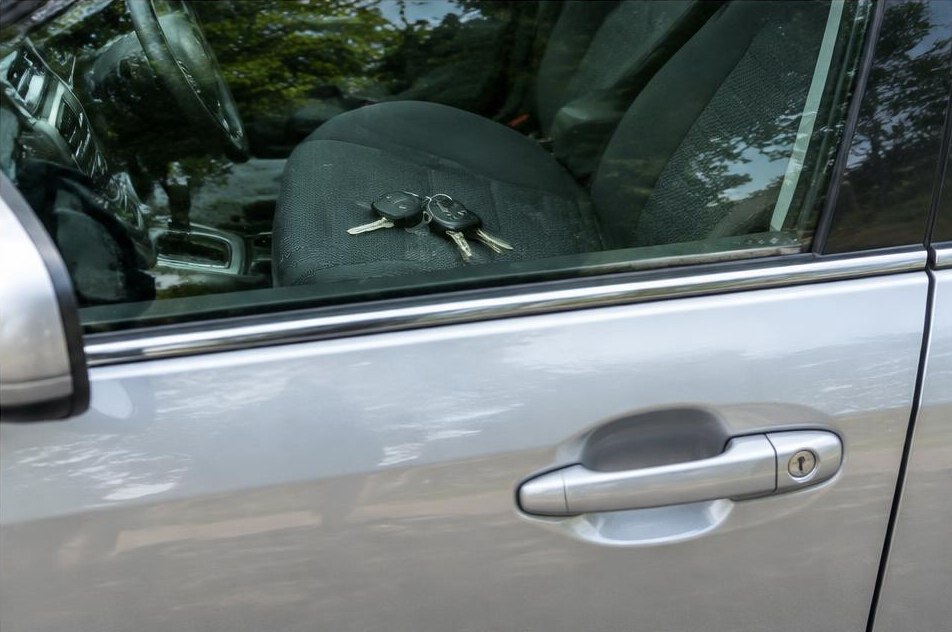
Keys sitting on the seat are frustrating, especially when you’re standing outside a locked car with groceries or a school pickup ahead. Take a breath and leave the door alone. Pulling harder or pushing a tool past the window can create a second problem. Check for a spare you can get safely, then call Arrival for car-lockout help. Tell us where the vehicle is parked in DC or Prince George’s County, what you drive, and whether anyone is inside.
Check the situation before the door
Look through the glass without climbing on the car or stepping into traffic. Confirm where the keys are, whether the engine is running, and whether a child or pet is inside. Immediate danger changes the next step: contact emergency services first and follow their instructions. Don’t wait on an ordinary roadside request when someone is at risk. Heat, distress, and exhaust are urgent concerns. Tell the dispatcher exactly what you see, including whether the person inside responds. Keep yourself available to guide responders from a safe position near the location.
If there’s no emergency, check the simple options that belong to your vehicle. A family member could have a spare nearby. Your vehicle could have an existing manufacturer access feature you already use. Follow its official instructions; don’t hand account passwords to a stranger offering a shortcut. Check another door only from a safe position and without forcing a handle. If the spare is across town and retrieving it means leaving a vulnerable person alone, explain that situation when you call. The goal is safe access, not creating more travel or another lockout.
Keep improvised tools away from the window
A hanger, screwdriver, or metal strip can damage much more than the visible weather seal. Modern doors contain wiring, moving parts, and equipment you can’t see through the glass. Prying the frame can affect how the window closes and how the door seals afterward. A short video can’t show the layout inside your particular car. Leave the trim and glass in place. Don’t encourage a bystander to keep trying because a gap has already appeared. Stop early and tell the person helping exactly what has been attempted so far.
Existing damage is useful information, not something to hide. Mention a loose handle, cracked window, bent trim, or an object already pushed inside the door. Say if the window is partly open or if a pet is pressing against it. Don’t insert another object to retrieve the first one. Keep children and curious bystanders back from the work area, particularly on a narrow DC street where an open door could face moving traffic. The technician needs space to work and an accurate picture of the vehicle before beginning an entry attempt.
Give directions to the car, not just the neighborhood
A call from College Park needs more than the name of a shopping center. Share the entrance you used, the row or nearby business, and the vehicle’s color. For a Hyattsville apartment complex, include building numbers and gate instructions. A Riverdale driveway can have access from a different street than the mailing address. Explain that difference at the start. If you share a map pin, check that it points to the car rather than the building’s front office. Stay reachable so you can clarify access without walking out into a busy entrance.
Garages need extra detail. Tell us the level, entry street, and any posted restrictions visible from a safe spot. If your phone loses signal below ground, agree on a contact plan while you have reception. Don’t leave the vehicle’s location unexplained and assume someone can search every floor. At a curb in DC, give the nearest intersection and the side of the street. Along US-1, a named business entrance is more useful than pointing across several lanes. Good directions reduce confusion and keep everyone away from unnecessary traffic exposure.
Have authorization ready and know the job
Be ready to show identification and establish that you’re entitled to enter the vehicle. Tell us if registration is locked inside so the verification steps can be planned. For a borrowed, rental, or work vehicle, have the relevant authorization information available. Don’t send personal documents to unrelated people who approach you at the lot. Keep your phone with you and answer the callback tied to your request. Clear ownership information helps the visit stay focused on restoring access to the right vehicle for the right person.
Arrival’s car-lockout assistance is about getting you back into your vehicle. Lost keys, a broken key, or a fob that needs replacement are different problems requiring a suitable automotive specialist. Describe the situation accurately: keys visible on a seat are different from keys missing somewhere in Greenbelt. Once access is restored, put the keys in your hand or pocket before closing a door. Check that you have your phone, wallet, and passengers’ belongings too. If the vehicle still won’t start with the retrieved key, explain the new symptom instead of assuming entry solved everything.
Before the next trip, choose one consistent place for your keys when you leave the vehicle. Check that they’re with you before the last door closes. If a trusted person holds a spare, keep their contact details accessible somewhere other than the locked phone inside your car. Small habits help prevent a repeat interruption.
When to call Arrival
Call Arrival when your keys are locked inside and you need roadside entry assistance. Give us the vehicle model, exact parking location, and where the keys are. Have identification and authorization information ready, and mention any earlier entry attempts. We’ll come to you. If a child, pet, or anyone else faces immediate danger, contact emergency services before arranging routine help.
Learn about our car lockouts service. Find local help in Riverdale and Washington, DC.
CALL (833) 946-9308