
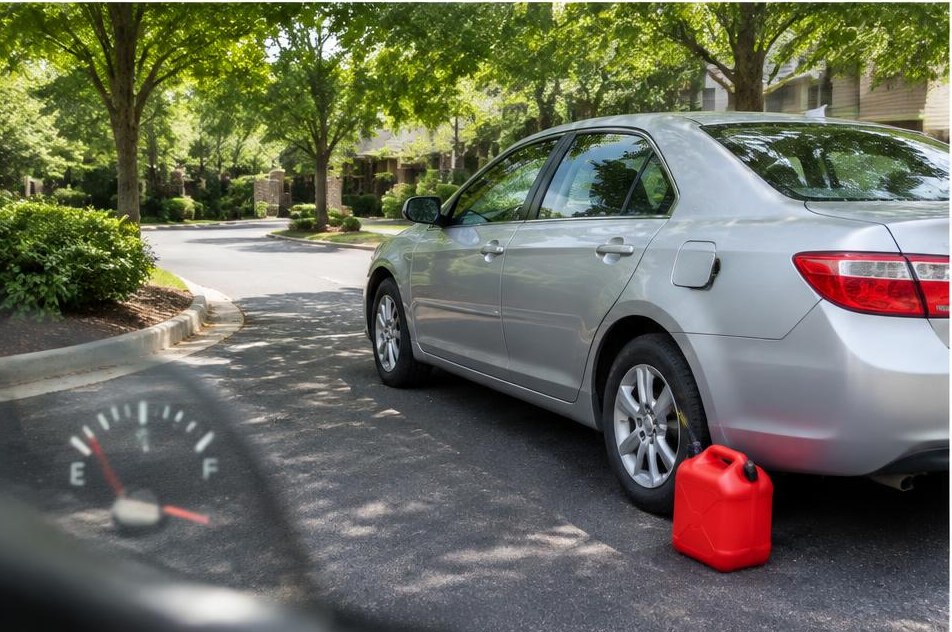
If your car runs out of gas, focus on the stop before the fuel. Keep control of the vehicle, reach a safe place as conditions allow, and turn on your hazard lights. Don’t turn a fuel problem into a dangerous walk along the Beltway. Call Arrival and tell us where you are. We deliver enough gas to reach a station, not a full tank. If your vehicle uses diesel, call first and identify that requirement before arranging a visit.
First, get clear about the surroundings
A fuel gauge near empty can explain a stall, but traffic conditions decide the immediate priority. If you’re still moving, avoid sudden steering and follow your vehicle’s guidance for a loss of engine power. Steering or braking assistance can change when the engine stops. Once stopped, set the parking brake. If you’re in a live travel lane or facing immediate danger, contact emergency services first. Don’t push a car across traffic or ask passengers to stand behind it as a warning. Ordinary roadside assistance isn’t emergency traffic control.
Look at the surroundings before opening a door. A shoulder on I-495 can leave very little space beside passing vehicles. A parking area off US-1 presents different choices. Follow emergency responders’ directions when they’re involved and keep passengers away from moving traffic. Don’t assume that stepping outside is always safer or that remaining inside suits every situation. Explain barriers, visibility, and the position of the car when you request help. Stay reachable by phone without walking into an exposed position just to improve your view of an exit sign.
Next, confirm what the vehicle needs
Tell us the make, model, and required fuel. Check the fuel-door label or manual if you’re unsure and can do so safely. Gasoline and diesel are different fuels; don’t guess from the vehicle’s size or appearance. For diesel, call first to explain the requirement. Let us know if the vehicle has any manufacturer instructions for restarting after an empty tank. Don’t add an unfamiliar product offered by a passerby. The right fuel and the correct procedure matter more than getting any liquid into the tank quickly.
If you suspect the wrong fuel has already been added, stop and leave the engine off. Adding more of the correct fuel isn’t a substitute for addressing contamination. Tell an appropriate repair professional what was added and whether the engine has run since. Likewise, describe a fuel smell, visible leakage, smoke, or other unusual conditions before anyone handles fuel near the car. Keep flames, cigarettes, and ignition sources away. A gas delivery is for a vehicle needing fuel, not a repair for a leaking or contaminated fuel system.
Make your location specific enough to find
A town name starts the conversation, but an exact stopping point makes the visit possible. In Riverdale, give a street address and the entrance that reaches the car. In College Park, include the lot name, row, and nearby building. In DC, share the nearest intersection and side of the street. A map pin is helpful when you can send one, but check where it lands. Buildings, divided roads, and large parking areas can put a pin close to you while still directing someone to the wrong approach.
On MD-210 or the Beltway, give your direction of travel and the nearest exit or marker you already know. Say whether you’re on a ramp, shoulder, or side road. Don’t cross a road or walk back to a sign to make the description more precise. Share the vehicle’s color and any safe landmark visible from your position. Mention gates, garage levels, and other access restrictions at the start. Keep enough phone battery for a callback by reducing unnecessary use while leaving your phone available for the person coming to help.
Skip the dangerous walk and plan the next stop
A station that appears close on a map can be across a divided highway or beyond a stretch without a sidewalk. Carrying fuel adds another handling task to an already risky route. Don’t leave passengers stranded while you walk along traffic looking for a container. If you transport fuel in another situation, use a proper approved fuel container and follow its handling instructions. Drink bottles and improvised household containers aren’t suitable. At the roadside, requesting delivery keeps the plan focused on reaching the stopped vehicle with the correct fuel.
After fuel is added, follow the vehicle’s restart instructions instead of repeatedly cranking the engine. Tell the technician if it won’t start, runs roughly, or shows an unusual warning. Running out of gas isn’t the only reason an engine can stop, and adding fuel doesn’t fix an unrelated mechanical fault. If it runs normally, make the next destination a suitable station and replenish the tank. Don’t use the delivered amount for extra errands around Hyattsville. The delivery provides enough gas to reach a station, so keep that short recovery trip as the priority.
For future trips, choose a fuel stop before the gauge is nearly empty, especially when traveling with passengers or crossing busy corridors. Traffic delays and unfamiliar exits can disrupt an otherwise simple plan. Keep your preferred station as an option, not a reason to pass a suitable stop when the tank is already running low.
When to call Arrival
Call Arrival when you’re safely stopped and need gas delivered to reach a station. Tell us your exact location, vehicle details, and required fuel. Diesel drivers should call first. Mention any leakage, wrong-fuel incident, or unusual symptoms before the visit. We’ll come to you for roadside fuel help. If your position creates immediate danger, contact emergency services first.
Learn about our fuel delivery service. Find local help in Riverdale and Washington, DC.
CALL (833) 946-9308